
Engineered by Nature - We studied whale tubercles, fish gills, mangrove roots, shark skin and coral - and built millions of years of natural engineering directly into our flow conditioners.

Shark Skin Anti Fouling Insert

We refuse to accept fouling as an inevitable reality.

Our competitors are building meters that accept fouling as an inevitable reality and try to warn the operator right before the meter dies.

We are building meters that use the fluid’s own kinetic energy and biomimetic surface chemistry to make fouling mathematically improbable.

We’re Different

The industry’s standard anti-fouling methods are essentially “brute force” reactions to a poorly managed fluid environment. Our biomimetic approach is fundamentally different because it manipulates the physics of the boundary layer before the fouling can anchor.

We are building meters that use the fluid’s own kinetic energy and advanced surface chemistry to make fouling mathematically improbable.

A self-cleaning sensing region, built into the meter. The Shark Skin Anti Fouling Insert is an integrated meter-body insert designed to keep the electrode region cleaner for longer. It combines sharkskin-inspired riblets, fish-gill lamellae, a localized Coanda scour rib, low-adhesion surface treatment, and pulse-clean support inside a compact DN80 insert package.
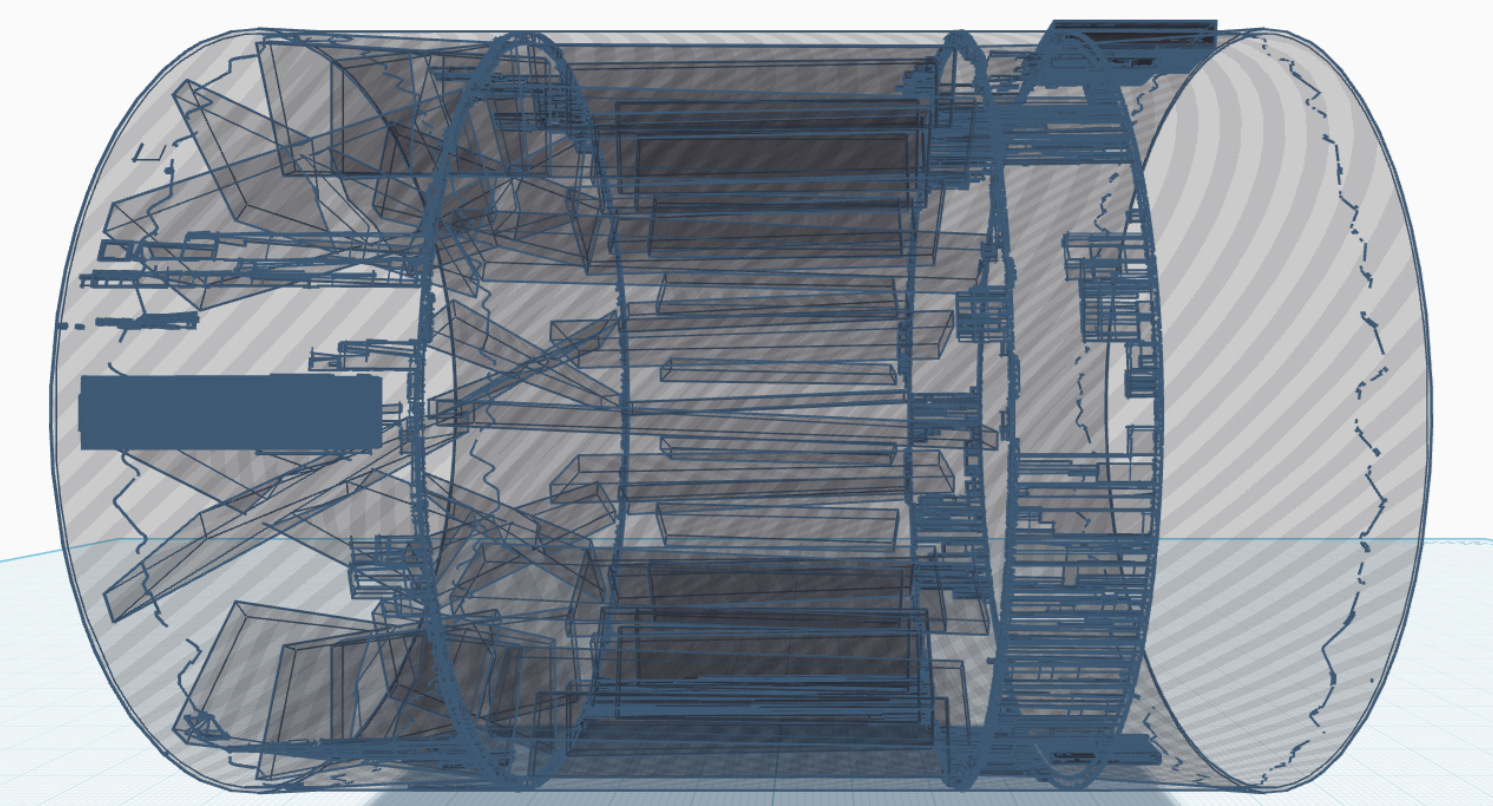

The Nature Behind the Design

This product is different from the Lagoon anti-swirl conditioners. The inline conditioner and elbow products are sold for disturbance cleanup ahead of measurement. The Shark Skin Anti Fouling Insert is sold for electrode-region anti-fouling and service-life extension inside the meter body.

Nature uses more than one trick to keep surfaces clean. This insert combines several of them in one architecture:

Sharkskin riblets: fine directional riblets help maintain wall wash and discourage stable deposit buildup.
Gill lamellae: a compact lamellar structure promotes controlled local exchange without brute-force blockage.
Coanda scour rib: a small asymmetric rib near the sensing region creates a localized scrubbing jet where fouling matters most.
Coral-like and quasi-random surface structure: bounded irregularity helps break up low-exchange pockets before they stabilize.
Lotus + SLIPS surface package: low-adhesion surface behavior reduces how easily early films and residue anchor.
Pulse-clean support: the current locked DN80 reference design includes periodic clean-pulse support as an active backup layer.

The result is not a single anti-fouling feature. It is a stacked anti-fouling architecture built around the sensing region.

Key Specifications

Parameter Value
Product role Integrated anti-fouling insert for mag-meter sensing region
Locked reference size DN80
Insert body length 80.0 mm
Meter-body protrusion 19.3 mm
Vane passages 16
Pressure drop at 2.0 m/s ~0.57 kPa
Max simulated measurement error ~0.16%
Local shear proxy improvement ~2.9x vs DN80 straight-pipe baseline
Stagnant-pocket proxy ~0.30x vs DN80 straight-pipe baseline
Material baseline 316 stainless steel
Surface package Lotus-style low-adhesion + SLIPS-style slippery surface
Active cleaning support Periodic clean pulse
Moving parts None

DN80 Locked Geometry Snapshot

Feature Locked DN80 v1 Value
Stage A length 26.23 mm
Stage B length 43.04 mm
Stage C length 10.72 mm
Vane angle 45.9°
Riblet height 48.3 µm
Riblet pitch 467 µm
Coanda scour-rib height 0.35 mm

All values above refer to the current locked DN80 baseline: ‘shark_skin_antifouling_insert_dn80_v1’.

Performance

Simulation-based DN80 anti-fouling lead. In the current fouling model, the locked DN80 design increases median time to first maintenance warning from about 99 days to about 290 days. That is roughly a 2.9x increase.

Large extension in median time to service-level failure. In the same model, median time to the `Service Required` threshold increases from about 206 days for the DN80 straight-pipe baseline to about 2026 days for the locked insert. That is approximately 9.8x longer.

Within-year service demand drops sharply. In the current one-year fouling simulation, the DN80 straight-pipe baseline reaches service within the year in about 90% of simulated cases. The locked insert reduces that to 0% in the same model horizon.

Measurement path remains inside the current target envelope. The locked DN80 design also holds simulated maximum measurement error to about 0.157% with pressure drop of about 0.572 kPa at 2.0 m/s.

These are current simulation results for the locked DN80 reference profile, not yet field-life claims.

Who It's For

– New DN80 mag-meter assemblies where fouling at the sensing region is the dominant service risk.
– Installations with residue, hardness, solids, or biofilm that drive frequent electrode cleaning.
– OEM meter programs that want an integrated anti-fouling architecture instead of an external spool piece.
– Sites where reduced manual service frequency matters more than upstream disturbance conditioning.

Installation

The Shark Skin Anti Fouling Insert ships as a matched meter-body component. No separate spool piece is required.

1. Confirm flow direction and matched meter-body orientation.
2. Install the insert into the DN80 meter body per the assembly drawing.
3. Connect the sensing-region service and pulse-clean interfaces if equipped.
4. Return the meter to service and verify healthy status.

The insert adds no extra pipe length outside the meter body and no additional external flanges.

The Commercial Difference

Strategy Category The Industry Standard (Competition) Our Advanced Architecture The Commercial Difference
Mechanical Scrubbing Protruding “Bullet” Electrodes: Shoves a physical obstruction into the flow to cause turbulence, creating heavy form drag. Active Hydro-Scrubbing: Triggers a localized, attached scrubbing jet directly over the sensor without blocking the pipe. Achieves mechanical scrubbing without adding bulk form drag, mathematically protecting our sub-1.0 kPa energy-saving claim.
Active In-Situ Cleaning Ultrasonic / AC Burn-Off: Expensive, power-hungry mechanisms that interrupt flow measurement and increase hardware cost. In-Situ Micro-Pulse Cleaning: A proprietary pulse system that actively removes deposits during background diagnostic windows. Violent, active physical cleaning with zero moving parts, driving the annual service rate down to 0.1%.
Material Defenses Passive Fluoropolymers (PTFE/PFA): Standard non-stick liners delay scaling, but in hard water, calcium eventually nucleates and builds up. Advanced Bio-Inspired Anti-Adhesion: A biologically inspired, fluid-repellent barrier that actively suppresses deposition. Scale and biofilm physically cannot find a solid nucleation point to anchor to, drastically outlasting passive Teflon.
Predictive Diagnostics Standard Impedance: Measures total resistance. If a rainstorm flushes fresh water into the pipes, conductivity drops, triggering a false “Fouling” alarm. Multi-Variable Diagnostics: Advanced signal processing decouples true coating thickness from bulk water conductivity shocks. Eliminates expensive, false-positive utility dispatch calls. The meter only throws a “Yellow” light when it actually needs service.
Field Service & Uptime Pipeline Shutdown: If an electrode is irrecoverably destroyed, the operator must depressurize the line and remove the entire heavy meter body. Under-Pressure Replaceable Architecture: A highly economical, fully sealed replacement cartridge. A single technician can swap a destroyed sensor in under 11 minutes without removing the meter from the pressurized pipe.

Comparison

Shark Skin Anti Fouling Insert Lagoon Inline
Primary job Electrode-region anti-fouling Upstream anti-swirl conditioning
Form factor Inside meter body Separate spool piece
Locked reference size DN80 Inline product family
Added pipe length outside meter 0 mm 200 mm
Best for Service-life extension inside matched meter Retrofit disturbance cleanup

If your main problem is upstream swirl and disturbed approach flow, see the Lagoon Inline Conditioner. If your main problem is sensing-region fouling inside the meter, this is the integrated product page to start with.

All performance statements on this page refer to the current locked DN80 simulation baseline as of March 23, 2026. Bench and field validation are still in progress.

© 2023, Mag Flow Meter